
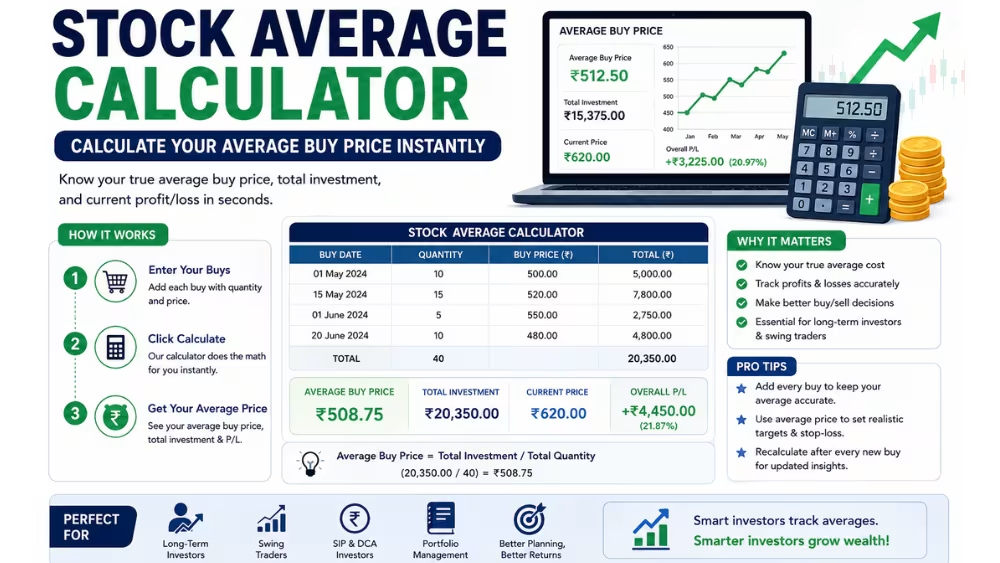
It can be difficult to determine the actual cost per share if you purchased shares at different prices. Simply enter the quantities and purchase price of your stocks, and our stock average calculator will do all the calculations for you in seconds, and you will be able to see your average buy price and Total Value of investment. It provides clarity in a single click, whether you're looking to do a cost average or simply keep an eye on your portfolio's cost basis.
What Is a Stock Average Calculator?
A stock average calculator is a free online tool that computes the average price of a stock with multiple purchases, weighted by the number of shares purchased at each price. It's also called an average down calculator or cost basis calculator, because investors use it most often after they purchase additional shares of a stock that they already own, which are usually acquired at a different price than the initial purchase. The calculator adds up all of your purchases in one easy number: Average Cost per Share.The calculator shows you the total cost of your purchases in one easy number, the average cost per share, rather than having to manually calculate it in a spreadsheet.
How to Use the Stock Average Calculator
The calculator does not require much time to use, just under a minute. With it, it works as follows:
Step 1 – Enter Your First Purchase (Price & Quantity)
Enter the Original purchase price per share and the number of shares purchased. If you purchased 10 shares at $50, then you would use these numbers in the first row.
Step 2 – Add Additional Buy Transactions
Click "Add Transaction" for each additional purchase you've made of the same stock. Fill in the price and quantity for each buy, regardless of the number of rounds played.
Step 3 – View Your Average Price & Total Investment
The calculator automatically calculates your weighted average price per share, total shares owned, and total amount invested, as you add or edit entries.
Stock Average Price Formula (How It's Calculated)
The calculator's weighted average is the standard approach used by brokerage firms and accountants:
Average Price = (P1×Q1 + P2×Q2 + ... + Pn×Qn) / (Q1 + Q2 + ... + Qn)
If P is the price per share and Q is the number of shares bought in each deal, the sum of all purchases is the total value.The total value is the sum of all purchases, where P is the price per share and Q is the number of shares bought in each deal.
Worked Example
Here's the same example in Indian Rupees:
Purchase 1: 10 shares at ₹100 = ₹1,000
Purchase 2: 20 shares at ₹70 = ₹1,400
Total investment = ₹1,000 + ₹1,400 = ₹2,400
Total shares = 10 + 20 = 30
Average price = ₹2,400 / 30 = ₹80 per share
Although ₹80 was never actually a price at which the stock traded, it was the average price at which the stock was bought across both transactions.
Why Calculate Your Average Stock Price?
The average price you paid for your stock isn't just a pleasant number to know; it can actually impact your investment choices and tax reporting.
-
Consider the actual cost basis for taxes: When you sell, the capital gain or loss you report is based on your average price (or cost basis).
-
Make informed averaging down decisions: Prior to a purchase of additional shares at a lower price, you may view just how much it will reduce your average price.
-
Track your break-even point: Your average price is the price at which the stock will have to get to before you turn a profit.
Average Down vs. Average Up – What's the Difference?
Those who “average down” a stock purchase are purchasing more shares when the price has decreased, thereby reducing the average price of each share they own. A popular approach among investors who remain positive on a stock over the long-term but wish to lower their break-even level.
The opposite of averaging down is averaging up: the purchase of additional shares when prices are climbing higher will raise the average per share price. It's sometimes done by traders to increase their winning position, but it can also cause them to take more risk if the stock turns against them.
There are no right or wrong approaches, it's whatever works for your investment thesis, risk tolerance and confidence in the stock.
When Should You Use This Calculator?
You don't need to open a spreadsheet every time you add to a position. Use the calculator whenever you:
- Buy the same stock in tranches — e.g. via SIP-style investing or staggered entries.
- Average down after a dip and want to instantly see your new break-even price.
- Track multiple lots bought across different brokers or trading apps before filing taxes.
Common Mistakes When Calculating Average Stock Price
Beware of these common mistakes:
-
Don't forget brokerage fees and commissions: These costs will come out of your actual share price, even if they don't show on the sticker.
-
Buying stocks with multiple exchanges: If you have purchased the same stock from different exchanges or accounts ensure that you convert all prices to one currency first.
-
Adjust historical purchase data for stock splits or bonus shares: When a stock splits, or bonus shares are issued, the number of shares an investor owns will change and the price basis of the shares will adjust accordingly.
Start Calculating Your Average Stock Price Now
Put an end to the spreadsheet juggling and hand calculations! Our stock average calculator always provides the accurate, timely answer each time you add to a position.