
A demat account is an account that stores your securities and shares in an electronic format, eliminating the need for paper certificates. Brokers have taken a nibble on returns for years, with a commission tacked onto each buy or sell order. But this is rapidly changing as a new generation of platforms re-imagines what investing should really cost — and it has created a much more frictionless path for many more people to get started.
Top Demat Accounts with Lowest Charges in India 2026
|
Broker |
Account Opening |
AMC |
Brokerage (Delivery) |
Brokerage (Intraday/F&O) |
Highlights |
|---|---|---|---|---|---|
|
Dhan |
Free |
Free |
Free |
₹20/order |
Full trading suite, pledge via mutual funds |
|
FYERS |
Free |
Free |
Free |
₹20/order |
Advanced charting, free MF investing |
|
Alice Blue |
₹0 (limited offer) |
₹400/yr |
₹15 or 0.01% (lower) |
₹15 or 0.01% (lower) |
"Freedom 15" plan, ANT platforms |
|
Samco |
₹0 |
₹400/yr |
₹20/order |
₹20/order |
AI-powered analytics, StockBasket |
|
Zerodha |
₹0 |
₹300/yr + 18% GST |
Free |
₹20 or 0.03% (lower) |
Kite & Coin, strong educational resources |
|
Upstox |
Free (limited offer) |
₹25/month |
Free |
₹20/order |
Fast execution, research tools |
|
Groww |
Free |
Free |
₹20 or 0.05% (lower) |
₹20/order |
Beginner-friendly, seamless MF integration |
|
5paisa |
Free |
₹540/yr |
₹20/order |
₹20/order |
Flat brokerage, research-backed calls |
|
Angel One |
Free |
₹240/yr (1st yr free) |
Free |
₹20/order |
Research reports, advisory services |
|
m.Stock (Mirae) |
₹999 one-time |
Lifetime free |
Zero (all segments) |
Zero |
Best for high-frequency traders |
What Is a Zero Brokerage Demat Account?
A Zero brokerage demat account is a Demat account that is opened with a broker, and in which you don't pay any commission to buy or sell shares. You don't lose profits due to a per-trade fee, and you're better off with a higher profit margin. It is particularly favored by those who have just begun trading and by traders with high levels of activity who make many trades that are typically of small size, as the impact of small brokerage fees can still be felt with dozens of trades.
It's worth noting the "zero" usually applies to equity delivery trades. Even in the intraday and F&O (futures and options) trading, there is a per-order charge, usually a fixed fee of ₹20 per order.
Understanding a Demat Account in India
A demat account in India is a must have for all investors trading on the Indian stock exchanges, and they need to have a demat account with a depository participant who is registered with NSDL or CDSL. Your digital locker for shares, mutual funds, bonds and EFTs. If you lack one, you cannot get involved in the market. With the competition among the brokers increasing, there are zero-brokerage and low-cost brokerage models that have become the norm instead of the exception, making now the perfect time to open an account and begin investing.
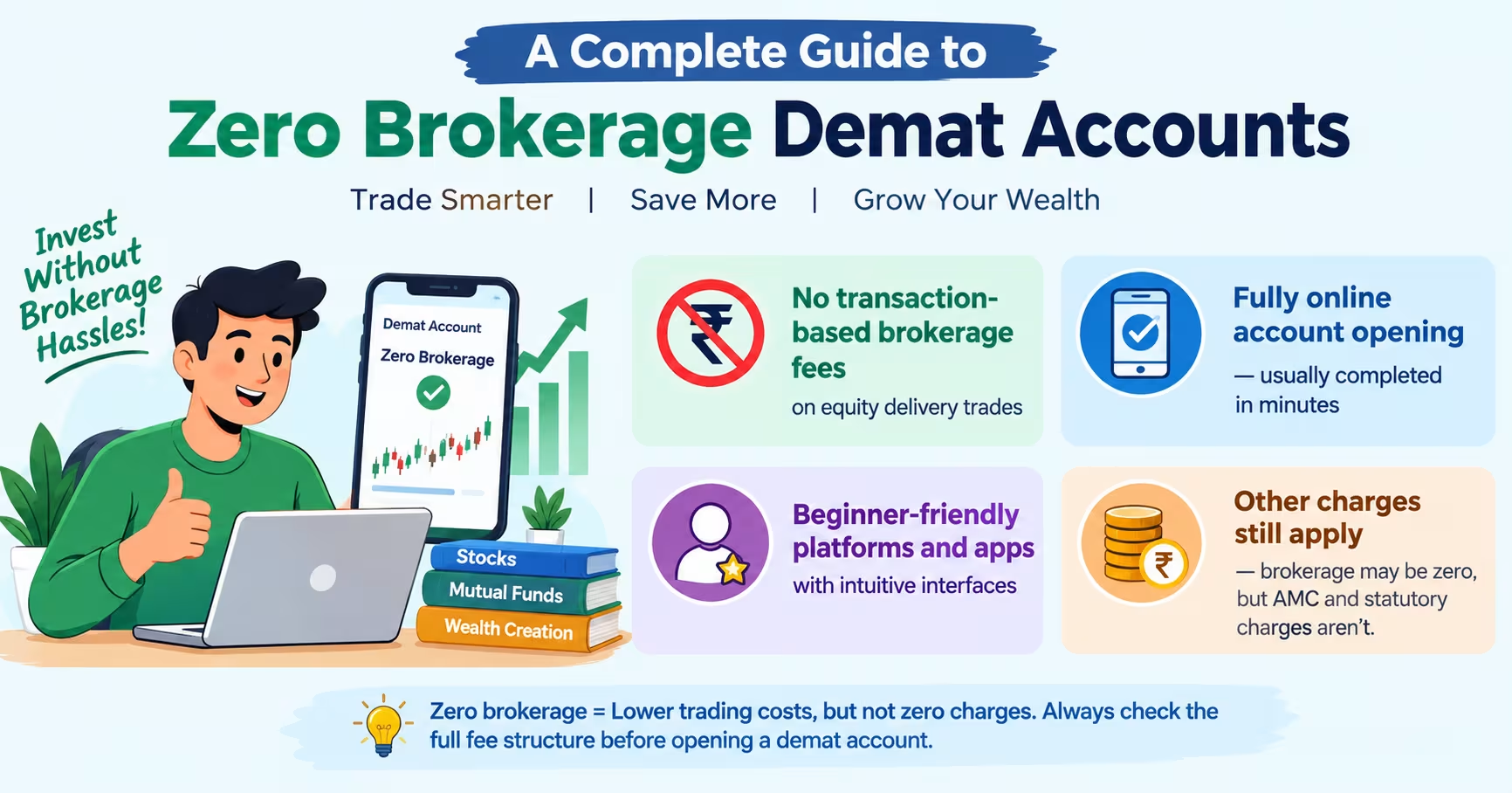
Key Features of Zero Brokerage Demat Accounts
-
No transaction-based brokerage fees on equity delivery trades
-
Fully online account opening — usually completed in minutes
-
Beginner-friendly platforms and apps with intuitive interfaces
-
Other charges still apply — brokerage may be zero, but AMC and statutory charges aren't
Demat Charges You Should Actually Know About
Many new investors don't realize this, but zero brokerage does NOT mean zero cost. Knowing the demat charges in detail helps you stay clear of unexpected charges later on. Common charges include:
-
Account opening charges — often free or heavily discounted as a promotional offer
-
Annual Maintenance Charge (AMC) — a yearly fee for keeping your demat account active, ranging from free to a few hundred rupees
-
Transaction/DP charges — small fees charged by the depository for each debit transaction
-
STT (Securities Transaction Tax) — a government-levied tax on every trade
-
Stamp duty and GST — statutory charges applied regardless of broker
Zero Brokerage vs Regular Demat Account
The brokerage fee for a regular demat account may be either a percentage based on the trade value or a fixed amount per trade, in addition to AMC and transaction fees. There is no trading commission with a zero brokerage account, but the cost structure remains unchanged. The savings that can be achieved over time can be substantial, especially for high-frequency traders or those who are trying their luck for the first time.
How to Open a Zero Brokerage Demat Account Online
Step-by-Step Process
-
Select a Broker – Do research and select a brokerage platform that is registered with SEBI and has a zero brokerage.
-
Complete the application form – provide personal and financial information online.
-
Upload KYC documents — PAN card, Aadhaar, and bank statements are usually required.
-
Short video verification — some brokers need a short video verification, which is Complete In-Person Verification (IPV).
-
Activate your account – after you have validated, you can start trading.
Who Should Choose a Zero Brokerage Demat Account?
-
People who are new to the game and want to cut down on initial expenses.
-
Traders who engage in frequent trading and desire to maintain low trading costs.
-
Long-term investors who hold on to investments for a long period of time
-
Value-investors who want to maximize their money invested in each trade
Common Myths About Zero Brokerage Demat Accounts
-
Myth: Zero brokerage means completely free trading. Reality: AMC, STT, and stamp duty still apply.
-
Myth: Zero brokerage brokers offer poor service. Reality: Many offer strong customer support and advanced platforms.
-
Myth: Only suitable for small investors. Reality: Experienced traders use them too, purely for cost efficiency.
Compare zero brokerage demat accounts today and start investing with zero hidden surprises — check live charges before you open your account.