
Commodity Broker is an intermediary registered with SEBI and helps you in trading commodity contracts on commodity exchanges like MCX or NCDEX. Your choice of the right broker can help you save money and make your trading journey more smooth and comfortable, but there is a wide range of them available that have different levels of cost, services and technology. This article discusses what a commodity broker is, the types that are available, and a quick checklist for narrowing down the list of commodity brokers.
What Does a Commodity Broker Do?
A commodity broker is the person that connects you with the exchange. It does your buy and sell orders, offers a trading platform, manages your margin requirements, and in some cases, research and advice.
Commodities You Can Trade
Most brokers give access to metals such as gold, silver and copper, energy contracts such as crude oil and natural gas, and agricultural products traded on NCDEX.
Exchanges Covered
MCX is a primary trading platform for metals trading and energy trading, and NCDEX is a primary trading platform for agri commodities. Ensure that your selected broker has the segment that you are interested in.
Top Commodity Brokers in India by Active Clients
|
Rank |
Broker |
Brokerage |
Active Clients |
|---|---|---|---|
|
1 |
ICICIdirect |
₹20 per order |
21,56,209 |
|
2 |
Kotak Neo |
₹10 per order |
13,91,663 |
|
3 |
SBI Securities |
0.05% |
10,43,820 |
|
4 |
Motilal Oswal |
0.02% |
9,06,005 |
|
5 |
Mirae Asset Sharekhan |
0.10% (one side) |
5,27,565 |
|
6 |
AxisDirect |
0.03% (each leg) |
4,29,479 |
|
7 |
Anand Rathi |
0.02% |
1,52,440 |
|
8 |
Yes Securities |
0.01% |
95,661 |
|
9 |
Arihant Capital |
Rs 20 per executed order |
54,730 |
Types of Commodity Brokers
There are 2 types of commodity trading brokers.
Full-Service Commodity Broker
A full-service commodity broker provides online and offline trading, a relationship manager, research reports and call and trade support. The fee for brokerage is generally a percentage of the transaction value, which means that costs are generally higher.
You may Like:Full Service Brokers in India
Commodity Discount Broker
A commodity discount broker business concentrates on minimal, frequently none, commission, and a self-service application or web site. There is usually a limited amount of support and research.
|
Feature |
Full-Service Broker |
Discount Broker |
|---|---|---|
|
Brokerage |
Usually percentage-based |
Usually flat per order |
|
Research and tips |
Yes |
Limited or none |
|
Relationship manager |
Yes |
No |
|
Branch support |
Yes |
Rarely |
|
Best for |
Beginners wanting guidance |
Cost-focused, self-directed traders |
How to Choose a Commodity Broker: A 6-Point Checklist
The best commodity broker is not the most popular, but the one who is the best fit. Use these checks:
-
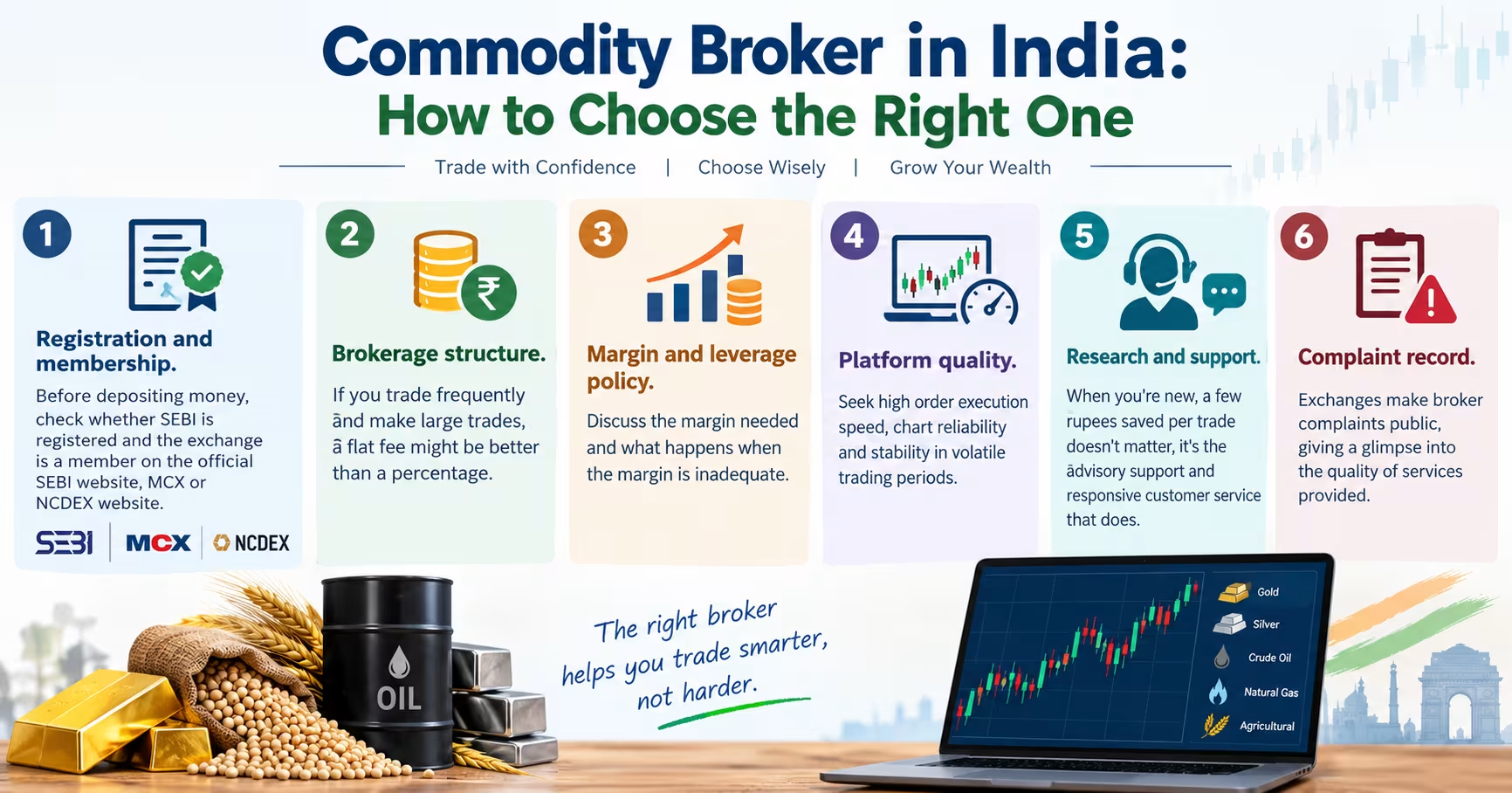
Registration and membership. Before depositing money, check whether SEBI is registered and the exchange is a member on the official SEBI website, MCX or NCDEX website.
-
Brokerage structure. If you trade frequently and make large trades, a flat fee might be better than a percentage.
-
Margin and leverage policy. Discuss the margin needed and what happens when the margin is inadequate.
-
Platform quality. Seek high order execution speed, chart reliability and stability in volatile trading periods.
-
Research and support. When you're new, a few rupees saved per trade doesn't matter, it's the advisory support and responsive customer service that does.
-
Complaint record. Exchanges make broker complaints public, giving a glimpse into the quality of services provided.
Not the cheapest-fee test should be the sole standard for a commodity broker who you can trust for your MCX trading; the trustworthy one has to meet all six tests.
Commodity Broker Charges: What You'll Actually Pay
Headline brokerage provides very little information.
Brokerage
Full-service brokers typically charge a fee that is a percentage of the transaction, and it is usually around 0.03% to 0.05%. Others have a fixed price for each order. Rates are subject to change, so be sure to check with the broker's website.
Additional Costs
Apart from the brokerage, there are added charges for the exchange transaction, GST, stamp duty and SEBI turnover fees. Other brokers may also impose call-and-trade fees and/or account maintenance fees.
Tip: Take a look at the total cost of one sample trade to compare brokers because the brokerage is not the only cost.
Who's the right Commodity Broker for You?
-
New to commodities and need some guidance: a full-service commodity broker with research and a committed relationship manager.
-
An experienced, Active and cost conscious: discount broker with a strong platform.
-
Intersegment trading: A broking which provides equity, F&O and commodities from a single account.
The risks of losing more than expected in commodity derivatives are high, because they are leveraged instruments. Only trade with money that you can waste.
Ready to compare? TheTopStockBroker breaks down the best commodity brokers in detail, so you can pick the right one and open your account in just a few minutes.
Conclusion
The decision of whether or not to use a commodity broker boils down to trading style and matching the services, costs and reliability. Check on the registration, and compare the total cost as well as testing the platform before putting in a lot of money.