
The typical beginner isn't successful in the first few trades, typically because they educate themselves in the market with their own funds. A demo trading app remedies that. It allows you to trade and transact using virtual currency at real or close real time rates, in order to make mistakes without having to pay for them. This guide will tell you everything about demo trading, 10 best demo trading sites in India and how to get started.
What Is a Demo Trading App?
A demo trading app is a platform that provides you with a virtual amount of money (usually ₹10 lakh or higher) to use for trading stocks, options, forex, or cryptocurrencies. There are no real transactions but prices reflect the real market value.
The terms “demo trading” and “paper trading” are used often interchangeably. Mean: Both are simulated trading. The only difference between real trading and this is that your profits and losses are not real, thus you can't remove the earnings or lose any capital.
10 Best Demo Trading Apps in India
Here are 10 popular choices, ranked by how useful they are for Indian beginners. Features and pricing change often, so verify details on each app’s official website before signing up.
|
App |
Best For |
Virtual Money / Mode |
Market Coverage |
Cost |
|---|---|---|---|---|
|
StockGro |
Beginners and gamified learning |
Virtual cash, contests, community |
Indian stocks |
Free (premium courses) |
|
Sensibull |
Options strategy practice |
Paper trading for options |
Index and stock options |
Free tier / paid plans |
|
TradingView |
Charting and global markets |
Built-in paper trading |
Stocks, forex, crypto, indices |
Free / paid plans |
|
Zerodha Streak |
Strategy testing and backtests |
Paper trading and backtests |
Equity, F&O |
Free / paid plans |
|
Opstra (Definedge) |
Advanced options analytics |
Strategy simulation |
Options |
Free / paid plans |
|
MetaTrader 5 |
Forex and CFD practice |
Demo account with virtual funds |
Forex, commodities, indices |
Free |
|
Investopedia Stock Simulator |
Learning basics, global stocks |
$100,000 virtual cash |
US and global stocks |
Free |
|
Dhan |
Active traders testing tools |
Practice tools (verify availability) |
Equity, F&O |
Free practice features |
|
Moneycontrol Virtual Trading |
Following the market via portfolios |
Virtual portfolio tracking (verify) |
Indian stocks |
Free |
|
NSE Academy / Broker Demo Modes |
Structured learning, platform familiarity |
Learning modules, broker demos (verify) |
Indian equity and derivatives |
Free / varies |
Benefits of Using a Demo Trading App
Learn Without Risking Real Money
All novices make mistakes; incorrect quantities, incorrect entries or panicking exits. However, in demo mode you won't pay anything except a lesson.
Understand Order Types and Platform Features
Geeky orders like market buying, limit, stop-loss and bracket orders may be confusing. These can be helpful to practice on a demo trading app, so that you don't make mistakes about clicking buttons that could cost you money later on.
Test and Refine Your Strategy
Can employ a strategy over a period of weeks and determine if it works or not. When it doesn't, you make your adjustments before you put your hard-earned cash into the game.
Build Confidence and Discipline
Having a trading plan, respecting stop-losses and properly sizing positions are habits. You can develop them early as a result of demo trading.
Key Features to Look for in a Demo Trading App
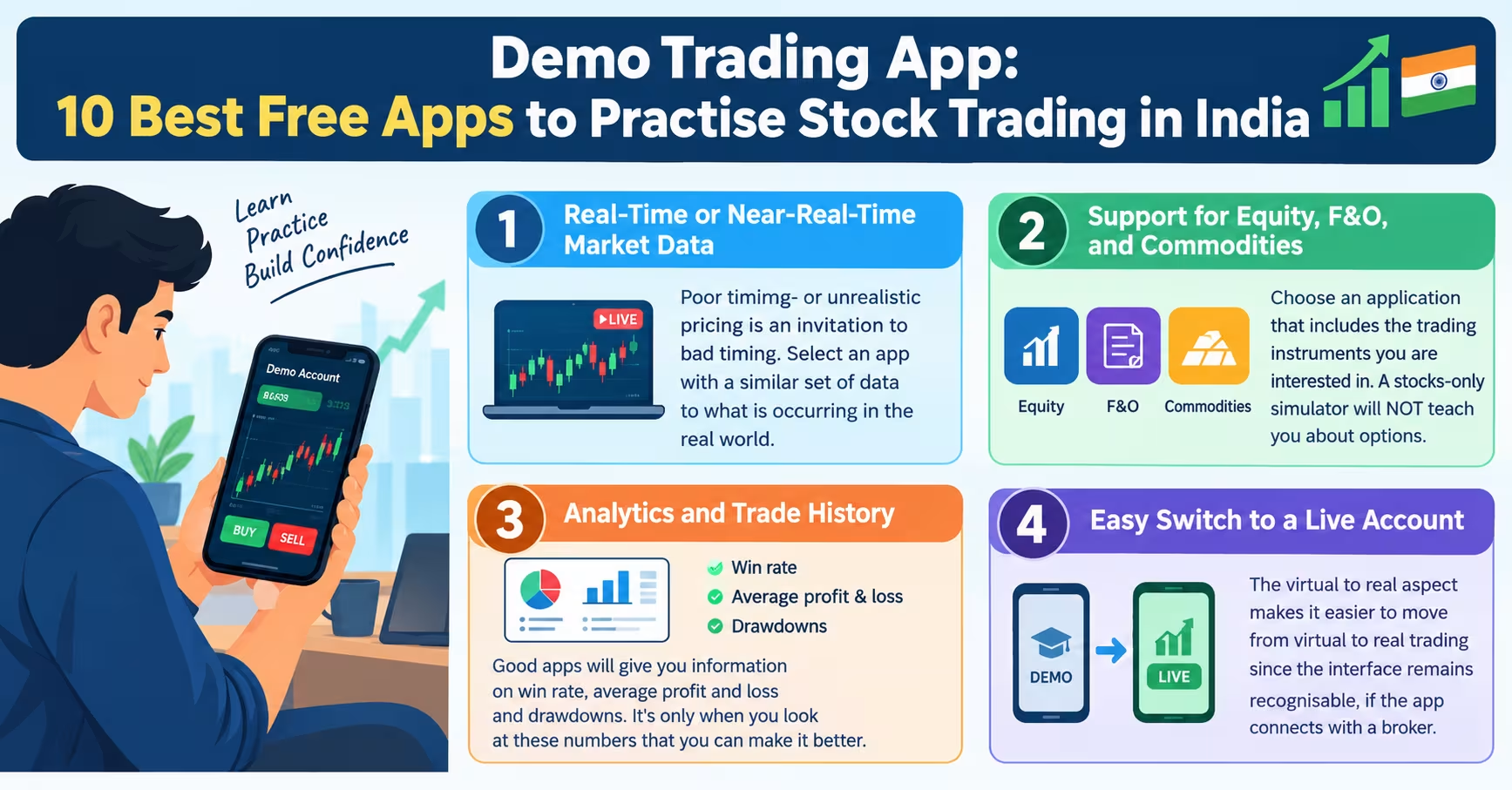
Real-Time or Near-Real-Time Market Data
Poor timing- or unrealistic pricing is an invitation to bad timing. Select an app with a similar set of data to what is occurring in the real world.
Support for Equity, F&O, and Commodities
Choose an application that includes the trading instruments you are interested in. A stocks-only simulator will NOT teach you about options.
Analytics and Trade History
Good apps will give you information on win rate, average profit and loss and drawdowns. It's only when you look at these numbers that you can make it better.
Easy Switch to a Live Account
The virtual to real aspect makes it easier to move from virtual to real trading since the interface remains recognisable, if the app connects with a broker.
How to Start Demo Trading: Step by Step
-
Choose an app that matches your goal, whether stocks, options, or forex.
-
Sign up with your email or phone number. Most demo apps need no KYC.
-
Set your virtual balance to an amount close to what you would really invest. Starting with an unrealistic ₹1 crore teaches poor position sizing.
-
Place practice trades using a written plan with entry, stop-loss, and target.
-
Review your results weekly. Note what worked, what did not, and why.
Limitations of Demo Trading
Demo trading is a great teacher, but it is not perfect. There is no real fear or greed, so you may trade more boldly than you would with actual money. Simulated orders also fill instantly, while real markets involve slippage and liquidity gaps. Finally, early success can breed overconfidence. Treat demo wins as practice, not proof. When you feel ready to move to live trading, compare brokers on thetopstockbroker to find a platform that matches your trading style, budget, and experience level.
Final Thoughts
The best way to learn how to trade the markets, test out strategies and develop discipline without risking any real money is by using a demo trading app. Try one of the applications on the list, practice regularly and only trade in real money when the results are consistent.