
In the first few trades most beginners lose money, typically due to poor risk management and not bad luck. A stock simulator is an application in India that allows you to practice trading stocks using fake money, allowing you to make all your mistakes without incurring any costs. In this guide, we are going to discuss the workings of simulators, which ones to use and when to enter real trading.
What Is a Stock Simulator?
A stock simulator is an application or platform that provides virtual money (usually between ₹10 lakh and ₹1 crore) to trade in a virtual stock market environment that closely mimics real-world conditions. Play without real money and watch your gains and losses.
Top 10 Stock Simulators in India
Here is a quick comparison of popular platforms:
|
Rank |
Platform |
Best For |
Markets |
Cost |
Key Feature |
|---|---|---|---|---|---|
|
1 |
StockGro |
Beginners, students |
Indian equities |
Free (premium courses) |
Contests and leaderboards |
|
2 |
Moneybhai |
Learners |
Equities, derivatives |
Free (paid tiers) |
Virtual portfolio tracking |
|
3 |
TradingView Paper Trading |
Chart-focused traders |
NSE, BSE, global |
Free (paid plans) |
Advanced charts plus paper account |
|
4 |
Streak (by Zerodha) |
Strategy testers |
NSE/BSE equity, F&O |
Free (paid plans) |
No-code backtesting |
|
5 |
Sensibull |
Options traders |
Index and stock options |
Free (paid plans) |
Strategy builder, payoff graphs |
|
6 |
Tradetron |
Algo traders |
Multi-market |
Free (paid plans) |
Algo paper trading |
|
7 |
Investopedia Simulator |
Global exposure |
Global (limited India) |
Free |
Virtual games |
|
8 |
Dhan |
Active traders |
NSE/BSE |
Free (account needed) |
Practice-friendly tools |
|
9 |
Univest |
New investors |
Indian equities |
Free (premium plans) |
Guided learning |
|
10 |
Opstra by Definedge |
Options analysts |
NSE index options |
Free (paid plans) |
Options analytics |
Features and pricing change often, so check each platform's official site for current details.
Best for Beginners
The first two are easiest to begin, StockGro and Moneybhai. They do not require any prerequisite market expertise and their contests and leaderboards maintain learning interesting.
Best for Options Traders
At Sensibull and Opstra, we are all about options. You can visualize the payoffs, compare strategies and experience the risk risk before you take your first actual order.
Best for Strategy Testing and Algo Traders
With Streak and Tradetron, you can develop rule-based strategies and backtest them against past or real-time data without having to write complex code.
How Virtual Trading Works
You register, get virtual money and buy or sell stocks that are listed on NSE and BSE. Most platforms will provide live or slightly delayed prices, thus your trades will be executed as per the real market movements. Your portfolio automatically updates and many apps display performance analytics.
Stock Simulator vs. Demo Account vs. Paper Trading
The terms are many times used interchangeably. Typically, a Simulator is a standalone learning application, with games and leaderboards. A demo account is provided by a broker or charting service. Paper trading is the act of trading, but not using any actual money.
Why Use a Stock Market Simulator in India?
Learn Without Losing Real Money
Any real loss will deter a new investor. Virtual trading allows you to see a bad trade, a stop-loss hit or a gap-down without suffering any losses.
Test Strategies for Equity, Intraday, and F&O
Intraday and options trading are very high risk and high-speed. A simulator is a tool that allows you to try a strategy in the weeks prior to investing money in it.
Build Discipline and Emotional Control
Trials of position sizing, stop-losses and patience ensure you get used to these practices that you will need in a real environment. Remember, virtual currency is less stressful than real, so approach each virtual transaction as one were it real.
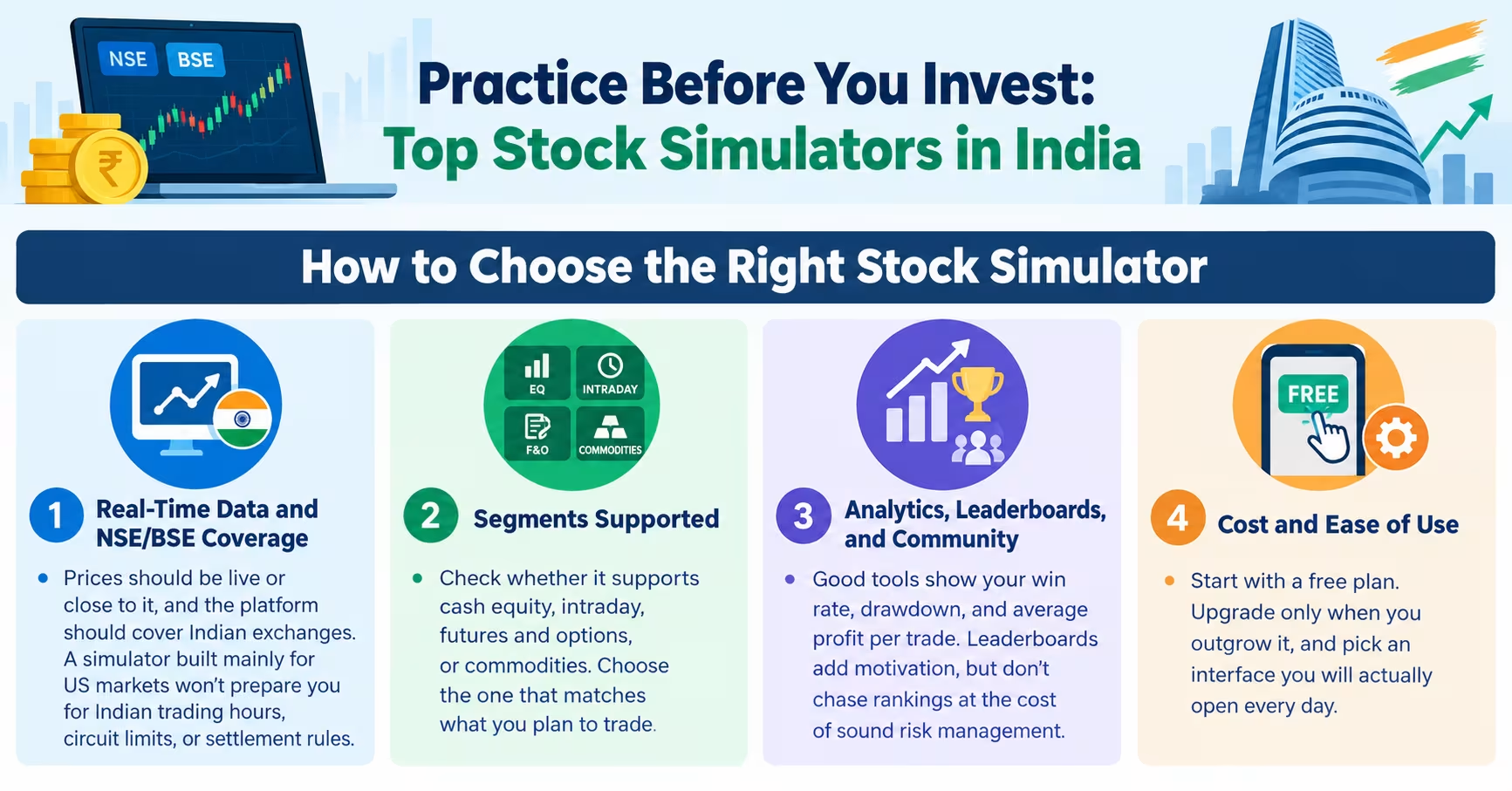
How to Choose the Right Stock Simulator
Real-Time Data and NSE/BSE Coverage
Prices should be updated or real-time and there should be Indian exchange coverage. Don't expect to be ready for the Indian trading hours, circuit limits or settlement rules with a simulator which is primarily geared towards US markets.
Segments Supported
Look to see if it offers cash equity, intraday, futures and options or commodities. Select the one that is similar to what you are going to trade.
Analytics, Leaderboards, and Community
This is the difference between good and bad tools: They will display your win rate, drawdown, and average profit per trade. While leader boards can be motivating, they can be used in a way that is not in line with good risk management.
Cost and Ease of Use
Use a FREE plan. Upgrade at the point where you outgrow it, and choose an interface that you want to use daily.
Conclusion
The only secure method to understand how the Indian stock exchange works is using a stock simulator. Select the platform that is aligned with your objectives, trade with discipline, monitor performance and only go live when your process is proved.
Play with virtual money as if it were real, and use a trading diary to identify trading patterns, such as overtrading. If you're consistent, compare brokers on thetopstockbroker prior to opening your demat account.
Disclaimer: Investments in securities markets are subject to market risks. This article is for educational purposes only and is not investment advice.