
Conduct a search on "best trading app" and you will find the same five names, the same glowing bullet points, and practically no truthfulness about where each app actually is lacking. This guide doesn't do the poll. It explains exactly how a great deal a good trading app is from a simply popular app, and why practicing your strategy on a paper trading app prior to going all in on real cash is a smart practice for traders.
What Makes a Trading App Actually Good
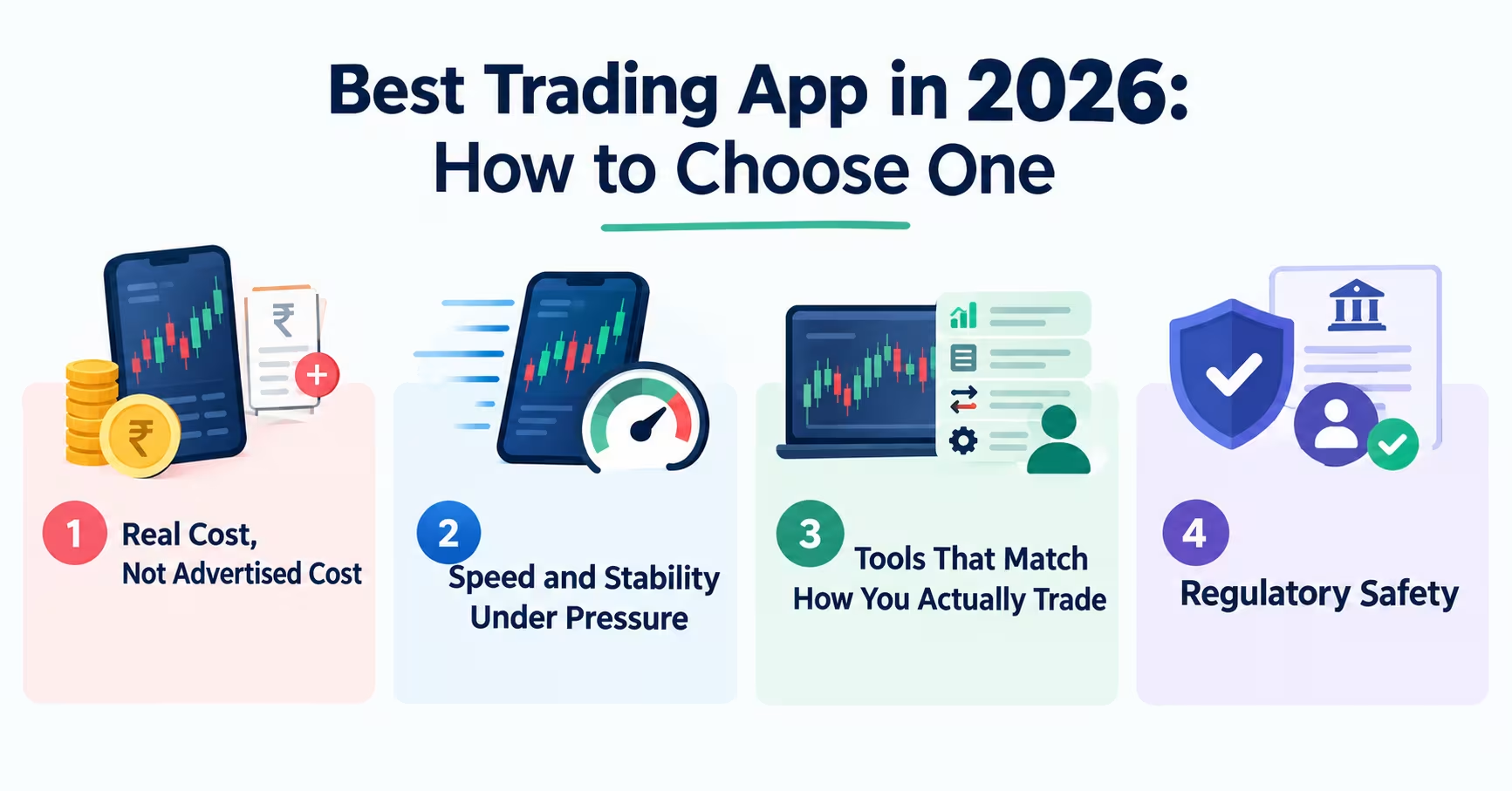
It is helpful to have some knowledge of the criteria for the comparison before starting to compare names. There are four more important things than a flashy home page. You can get more information about trading and brokers from thetopstockbroker.
Real Cost, Not Advertised Cost
The term ‘zero brokerage’ is not as straightforward as it sounds. Regardless of the app, the account maintenance fee, per-order fees on intraday and derivatives trades, withdrawal fees and regulatory fees are added on and on smaller trades could be more expensive than the brokerage itself.
Speed and Stability Under Pressure
You can save a few rupees on fees with an app, but it's of little value if it slows down or freezes when the market is moving rapidly. To active traders, execution speed and uptime is far more important during volatile sessions than the last rupee they can save.
Tools That Match How You Actually Trade
If they don't fit your trading style, charting depth, order types, and watchlists, as well as (for some) API access for automation are not important. You have to be simple for a beginner, fast and precise for an options trader.
Regulatory Safety
Use apps handled by properly regulated brokers, have your holdings in an individual account (not commingled with the broker's holdings) and have a clear complaints resolution process. This one filter is able to eliminate most of the dangerous unregulated platforms which target new traders with unrealistic promises.
Popular Trading Apps in India: Quick Comparison
To make things clearer, let's compare some of the most popular trading apps available in India by the above-mentioned categories. It is only a starting point, and always refer to the present rate card before opening a new account as brokers change rates frequently.
|
App |
Type |
Best For |
Delivery Brokerage |
Intraday/F&O |
Annual Fee |
|---|---|---|---|---|---|
|
Zerodha (Kite) |
Discount |
Overall / serious traders |
Free |
Flat per-order fee |
Charged |
|
Groww |
Discount |
Beginners |
Small fee applies |
Flat per-order fee |
Free |
|
Angel One |
Hybrid |
Low cost + research |
Small fee applies |
Flat per-order fee |
Charged |
|
Upstox |
Discount |
Fast execution |
Flat fee |
Flat per-order fee |
Free |
|
Dhan |
Discount |
F&O / active traders |
Free |
Flat per-order fee |
Free |
|
ICICI Direct |
Full-service |
3-in-1 + research |
Percentage-based |
Plan-dependent |
Varies |
|
Kotak Neo |
Discount |
Bank integration |
Free (plan-dependent) |
Low flat fee |
Free (plan-dependent) |
|
HDFC Sky |
Hybrid |
Bank + global stocks |
Flat/low |
Flat fee |
Varies |
|
5paisa |
Discount |
Budget / frequent traders |
Free or low |
Low flat fee |
Free (year 1) |
|
Paytm Money |
Discount |
Simple all-in-one |
Free |
Low flat fee |
Free |
Additionally, all trades also have statutory charges – STT, Exchange transaction charge, GST and stamp duty – all of which are decided by the regulators and not the broker – and therefore are consistent irrespective of which app you use. A depository charge will generally be levied on every sale of shares, even for apps with a zero brokerage tag. Be sure to verify the existing rates on the broker's site before you open an account.
Why You Should Try a Paper Trading App Before Any Live Trading App
This is a part of the 'best trading app' guide that many people miss out on, and it's perhaps more significant than the app you end up choosing.
What a Paper Trading App Actually Does
A paper trading app is a simulation of the market, with the same prices, charts and order book, except for the money that's used to place trades. You don't risk a single rupee and you have the feeling of watching a position move.
What It Teaches You That No Article Can
There are other differences between reading about stop-losses and reading a chart move against you as they are happening. Paper trading is the part where you get to learn how to size a position sensibly, sit through a losing streak and learn how your strategy performs on a calm market versus a market that is truly volatile — before it costs you money.
How to Paper Trade Properly
Don't take it lightly. Choose a virtual capital that is similar to the amount you might invest, trade like you would in a real portfolio and treat the losses as real. When your paper money isn't put in a neat place, it will cost you more money in the real world.
Matching a Trading App to Your Trading Style
New to trading? Look for a clean user experience, minimal (or no) account charges and in-built educational features before the more advanced features that you may not need yet.
Or trading intraday or options? In fact, the best app is one that is fast, has good charts, and has low per-order costs – that's where a slow app is going to cost you real money.
Investing long-term? Research, quality of products (stocks, mutual funds, bonds) is more important than rock-bottom per-trade fees, as you are unlikely to be trading often enough to lose too much money on this expense.
On a budget to trade? Look at the all-in cost per trade, not the number on the homepage, as this includes fees, account charges and withdrawal costs.
Moving from Paper Trading to a Live Trading App
You should be ready to go live when your paper trading performance is stable in various market situations (more than one time), and when you can actually follow your stop-losses on the actual trades, not just in paper.
The biggest sin of the trader changing his style is that he believes that discipline will carry over. It doesn't always. While you may feel confident about your trading on paper, real money brings real emotion—so try to play it safe and begin with less money than you would anticipate.
You May Like:Best Trading Apps in India 2026 For Beginners
Final Verdict
It's not always the app with the most colorful homepage or the smallest trade commission that will be the best trading app — it will be the app that's right for you, remains stable in volatile markets, and clearly lists all the fees. Familiarize yourself with any paper trading app before opening any real account. It's free, it develops the discipline that really determines your success or failure, and it ensures that you don't fall for your first lesson and your first real trade.