
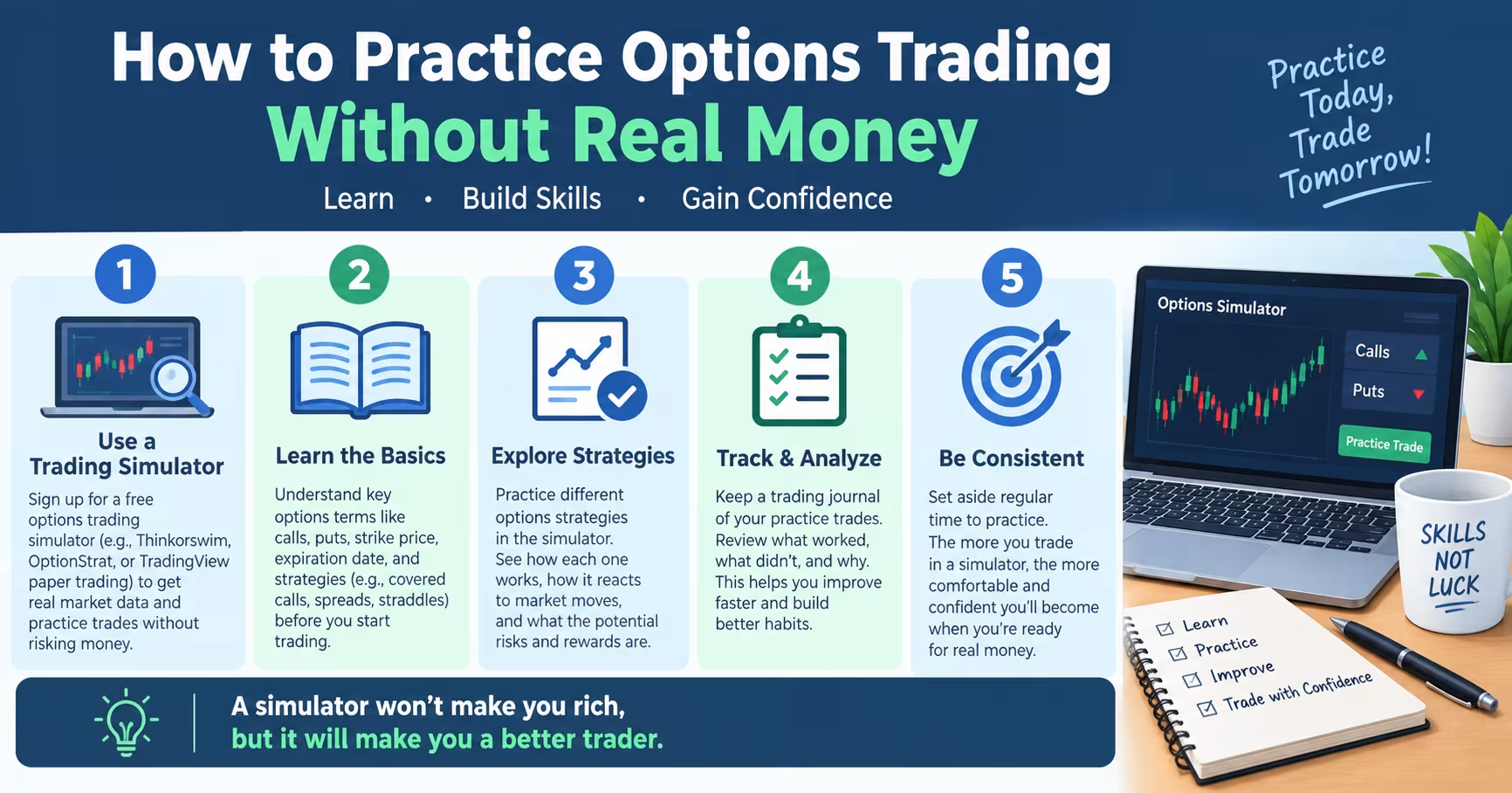
Most beginners make losses in options as they invest real money in options and do not know the concepts of premiums, expiry and time decay. A better way is to try practicing first. Option trading virtual trading app allows you to trade calls and puts with real money in real time without any risk. Explore virtual options trading, its benefits, indicators of a trustworthy app, and how to get started now.
What Is an Option Trading Virtual Trading App?
A virtual trading app is any type of application that replicates the authentic stock exchange but makes use of virtual money. They provide you a practice balance, usually ₹10 lakh or more, and you'll make trades on real-life options like Nifty and Bank Nifty. The prices, option chains and expiry date are the same as the real market.
Its major advantage over a regular broker account is that you don't change your actual savings in any way. It is a great source of learning for the beginners, a great tool for students to work on market projects and a great testing ground for experienced traders to test new strategies before they risk any capital.
Why Practice Options Trading Without Real Money?
Learn Without the Fear of Losing Capital
The price of an option may disappear in a blink of time as a result of small errors. A virtual account allows you to make any trades without loss of money, making it easier to get your hands dirty and learn.
Understand Premium, Expiry and Time Decay
Theory doesn't necessarily make it easy to understand concepts such as theta decay or implied volatility. It's better to learn by watching your practice position diminish as the expiry nears than from a textbook.
Build Confidence and Discipline
The same thing from analysis to the entry, stop-loss and exit is repeated over and over creating habits. When you're in the game with actual cash, it's a routine you know.
Key Features to Look for in a Virtual Options Trading App
Live Market Data and a Real Option Chain
Without timely or inaccurate data it's a waste. Select an application with the following options: live prices, strike prices, open interest and expiry dates.
Realistic Order Types, Margins and Charges
Good apps will offer market, limit and stop loss orders, margin rules and brokerage to ensure that your results are true to life.
Portfolio Tracking and Analytics
Check out profit and loss reports, win rate and trade history. Data of your personal behaviour reveals what to correct.
Learning Resources and Strategy Support
Multi-leg trades require less time to learn due to built-in tutorials, strategy templates and payoff charts.
How to Start Practicing Options Trading Step by Step
Step 1: Choose a Reliable Virtual Trading App
Choose an application that has live data, and user friendly interface and options-specific tools. Create an account with a virtual money.
Step 2: Learn the Basics of Calls and Puts
A call option will increase in value if the price moves up, while a put option will increase in value if the price moves down. Before trading, make sure you know what a strike price, premium and expiry are.
Step 3: Start With Simple Trades
Start with a single call/put. For instance, when Nifty is around the 24500 level and expects a bull market, one can go out and buy a slightly out of-the money call option, and place a stop-loss at 30 per cent of the premium and a target at 60 per cent. After that, observe the trading action as the market trends and time goes on.
Step 4: Test Strategies Like Spreads, Straddles and Covered Calls
If you become comfortable, then you can try defined-risk strategies. A bull call spread has capped gains and capped losses, a straddle benefits from a large price swing or rally or a large price drop. Try each one in various market situations.
Step 5: Review Your Trades and Track Mistakes
Create a trade journal. Write notes on the reasons for entering, what happened and what you learnt. In less than a few weeks, patterns in your errors are evident.
Looking to do these steps in practice? Open a free virtual account and make your first practice trade in mere minutes!
Common Mistakes to Avoid While Practicing
-
Paying attention to virtual currency inappropriately. If there are bad habits formed in practice, it's because they have over-leveraged. Use “real life” trade sizes.
-
Not taking advantage of stop losses and position sizing. Taking risk is more important than winning the lottery.
-
Overtrading expiry-day contracts. They are quick and transitory, and a bad place for novices to learn.
-
Skipping the journal. If you don't have records then you make the same mistakes.
Moving to Real Trading? When?
You've probably got what you need when you:
-
2-3 months not 1 lucky week!
-
A clear and structured approach that has a clear-cut level of risk and reward.
-
Emotional control with regard to your rules
If you do make the change, do so gradually. There's so much that can't be replicated with practice that real money brings emotions and slippage.
Conclusion
The key to options trading is preparation, and it's a reward. An option trading virtual trading application supplies you with a secure setting in which to study premiums movements, to experiment strategies and develop discipline prior to you committing any real cash. Work hard and review your trades; live trading only when you are ready.
Looking to make better trades? Download our virtual trading app and practice your
trading with a virtual cash of ₹10,00,000. No risk = No credit card.