
This scenario is familiar to every investor: A stock is ripe for a move, but the money you have in your account doesn't match the position you want to take. The Margin Trading Facility is there to resolve this very issue. It allows you to take out loans from your broker to purchase additional stock, even if you don't have enough money available to you to purchase all the stock. This guide explains what MTF is, how it functions, the advantages and disadvantages of engaging in it, and the guidelines set by the Securities and Exchange Bureau (SEBI) on MTF.
What is a MTF?
Margin Trading Facility is a product regulated by SEBI which enables investors to buy stocks with just a percentage of the trade value. The broker pays for any shortfall, and he becomes the lender of the money you put into the trading. You, in turn, pay interest on the borrowed amount until you pay it back or cancel the loan. Not all stocks are eligible for margin funding as MTF is available in securities listed under SEBI's approved list.
How Does Margin Trading Facility Work?
MTF trading is an easy and repeatable trading process. This is what happens in stages:
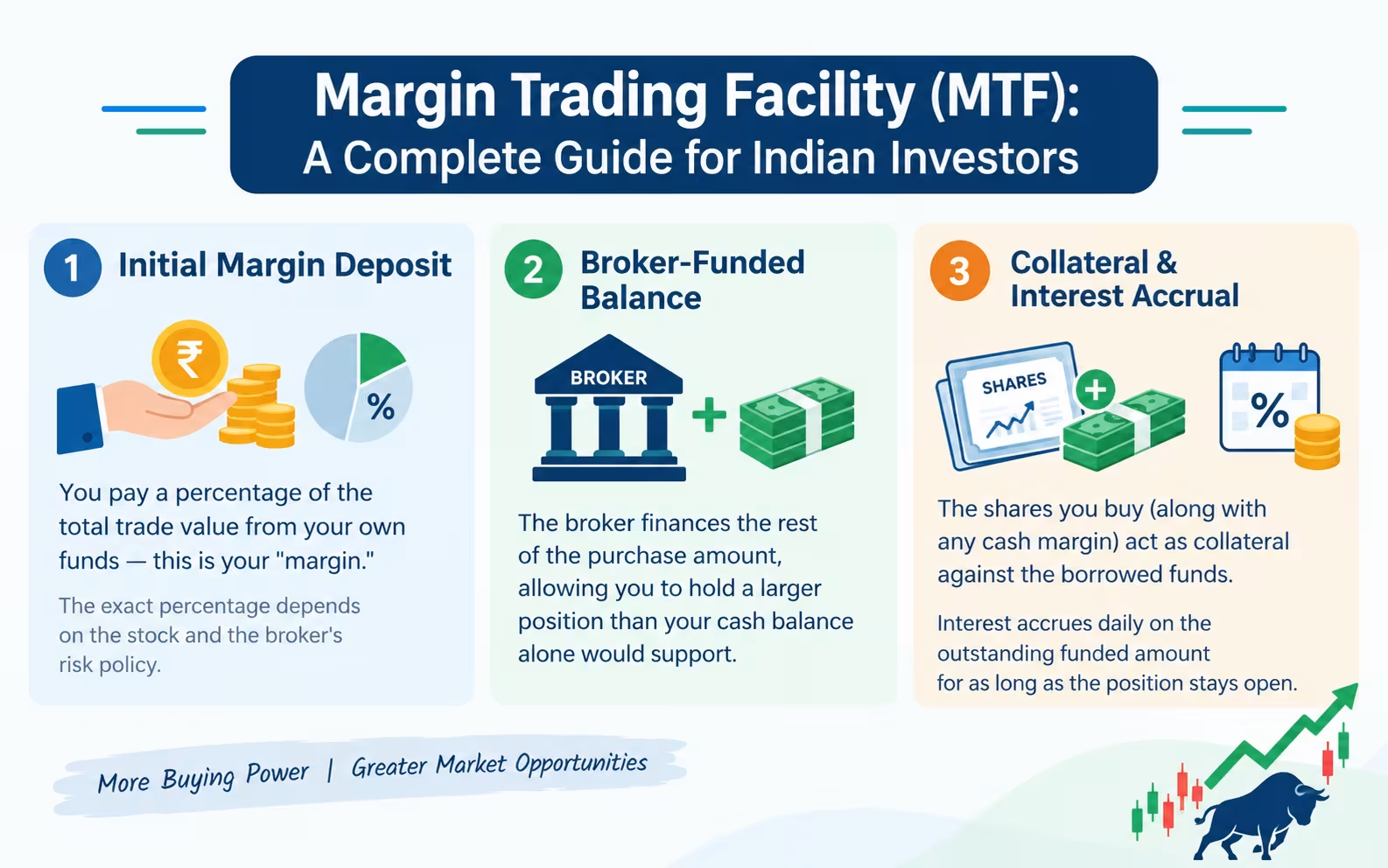
Initial Margin Deposit
You fund a percentage of the whole trade value; this is called your "margin. The percentage will vary based on the stock and the broker's risk policy.
Broker-Funded Balance
The broker will arrange financing for the balance of the purchase and enable you to complete a larger purchase than your cash balance would permit.
Collateral & Interest Accrual
When you purchase shares (and any cash margin), they serve as security for the borrowed money. The daily interest will be paid on the outstanding funded amount until the position is terminated.
Repayment or Position Closure
These can be paid back to transform the position back to a regular holding, or be square'd off by disposing of the shares, with the loan and interest paid from the proceeds of the sale.
Margin Trading Facility vs Regular Trading
|
Aspect |
Cash Trading |
Margin Trading (MTF) |
|---|---|---|
|
Capital require |
Full trade value |
Fraction of trade value |
|
Leverage |
None |
Yes, broker-funded |
|
Interest cost |
Not applicable |
Charged on funded amount |
|
Risk level |
Limited to capital invested |
Amplified due to leverage |
How to Calculate Your Margin Requirement
It is important to understand just how much margin you will need to make your entry into an MTF position and the interest you will earn on the amount you plan to hold. Margin requirements are based on the type of securities purchased and the type of brokers, and interest is calculated daily, meaning that a small mistake could affect returns for weeks.
This is where an MTF calculator can truly be of assistance. You no longer have to do the math on margin percentages, daily interest, or any other calculations, since you just enter in the trade value, funding ratio and expected holding period to see your upfront deposit and total interest outlook in an instant. It is a simple and quick method of sanity checking a trade prior to investing capital.
If you are comparing the Margin percentage, Interest rates, and Eligible stock list of MTF option across different brokers then, the help of a resource like TheTopStockBroker, which have side by side comparison of both the MTF related features and calculators to narrow down and choose a broker with MTF terms that suit your trading frequency and holding style.
Benefits of Margin Trading Facility
Higher Purchasing Power
With MTF you can take bigger positions without having to scale down the capital on a stock you believe in.
Flexibility in Holding Period
MTF positions can be held for a few days or even for a longer period, depending on the broker, allowing for the strategy to align with the trade.
Better Capital Utilization
Don't let your money sit idle; let it work for you in other positions with MTF.
Risks of Margin Trading Facility
Interest Cost Erosion
When you borrow money, you won't get it for free — interest accrues daily, and you may not be able to count on a position lasting as long as you hope.
Amplified Losses in Volatility
Nothing is gained by leveraging and nothing is lost. A small loss in cash trading will be a greater percentage loss when trading on margin.
Margin Call & Forced Liquidation
When the value of the stock drops below a certain level, the broker may require you to deposit more money or may sell your stock outright if you have borrowed it to cover the short sale, typically when you're not expecting it.
SEBI Regulations Governing MTF
MTF is regulated by the Securities and Exchange Board of India (SEBI). In order to use MTF, each investor needs to sign an MTF agreement with his broker, which describes the margin percentage, interest rate, list of securities eligible for MTF and the repayment terms. The brokers should also reveal funding information and risk management with transparency so that the investors are well aware of what they are entering into.
Who Should Use Margin Trading Facility?
MTF is most suited for traders and investors with some experience and those who have a short time horizon, as they can maintain a close watch on their trades and appreciate the influence of leverage. New traders, however, should take time to get familiar with the volatility and margin operations of the market before gaining exposure to leveraged products, which can either increase profits or losses.