
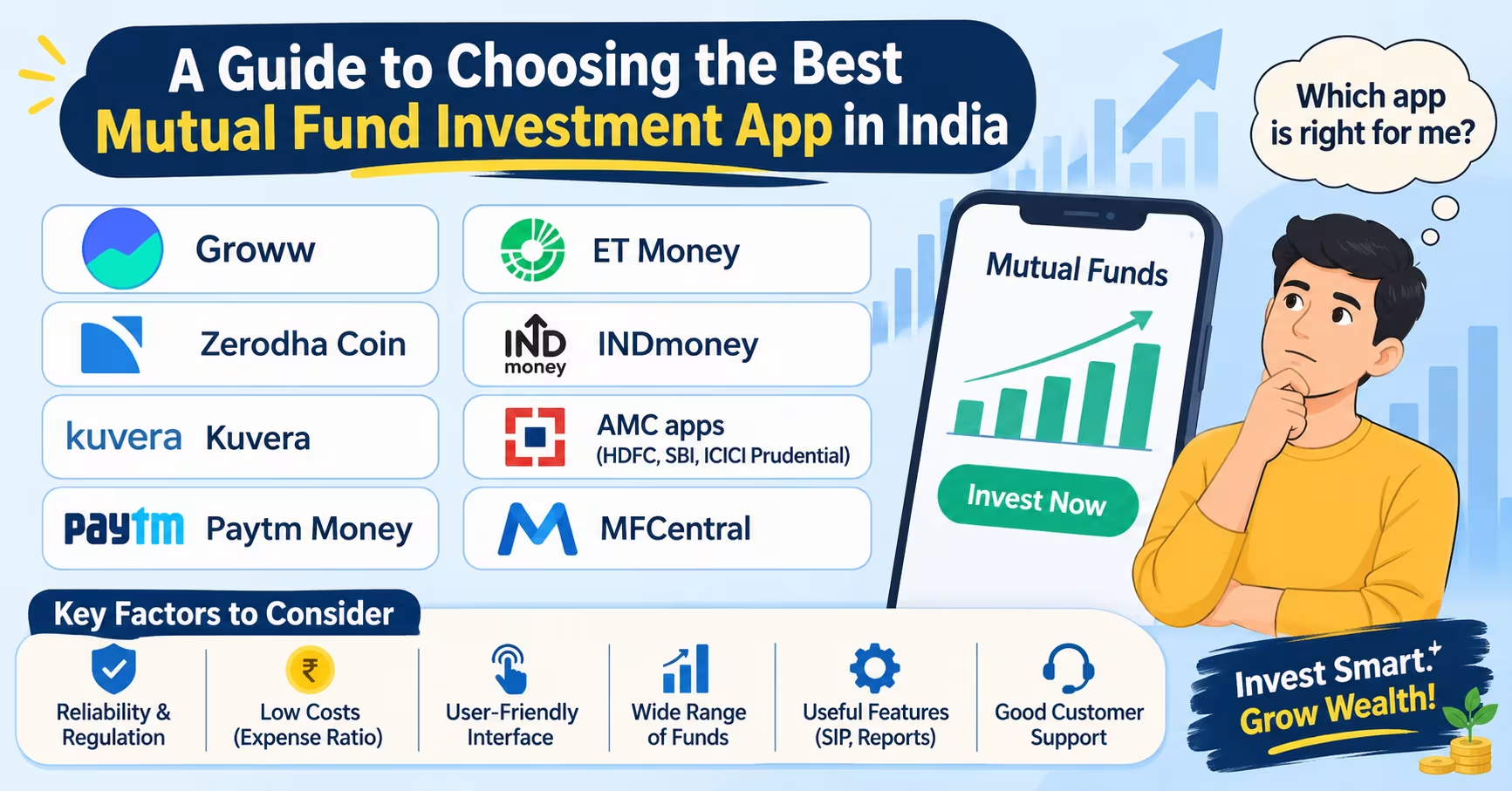
The process of starting a mutual fund was earlier paper-filled, cheque based and involved agent visits. It used to take a bit more time to get the job done today, but it's now made more difficult due to the sheer number of platforms that are virtually indistinguishable. They both offer SIPs, easy and smart tools, simple investing. However, the app you use impacts your costs, ease of holding on to your investment and visibility of results. This guide will help you determine what really counts so that you can select a platform that is right for you and your objectives rather than the platform that is screaming to find you.
I have personally used several mutual fund apps and this article draws on that hands-on experience. It will guide you through what really matters, so you can choose a platform that fits your own goals rather than the one that markets itself the loudest.
Why More Investors Are Moving to Apps
Apps eliminate many of the road blocks when it comes to investing. Complete KYC on-line, link bank account, select a fund and set up an auto SIP. No documentation to follow and no one to hold up.
The more significant advantage is the visibility. You can view all the funds in a single dashboard, monitor fund performance and adjust SIPs as and when the income fluctuates. The control is helpful if you are a salaried person who has to deal with rent, EMIs and savings goals. It is consistency and not market timing that creates wealth in the long-term.
Best Mutual Fund App in India: Popular Options Compared
There is no one winner, there is no one loser. The best mutual fund app will have to suit the lifestyle of the investor, the amount of guidance that is required and how much tracking is required. Well-known platforms are organized in the table below according to their strengths. The features and charges may alter frequently so check up to date information within every app.
|
App / Platform |
Type |
Best for |
Keep in mind |
|---|---|---|---|
|
Groww |
Broker + mutual fund app |
Clean, beginner-friendly interface |
Stocks are promoted alongside funds |
|
Zerodha Coin |
Broker platform |
Direct plans next to a demat account |
Minimal hand-holding for newcomers |
|
Kuvera |
Direct-plan specialist |
Goal and family portfolio tracking |
Fewer non-fund products |
|
Paytm Money |
Direct-plan specialist |
Direct plans without a trading account |
Check current feature support |
|
ET Money |
Tracker and planner |
Importing and reviewing existing funds |
Some advanced tools may be paid |
|
INDmoney |
Multi-asset app |
Funds, stocks and global assets in one view |
Can feel crowded for beginners |
|
AMC apps (HDFC, SBI, ICICI Prudential) |
Fund-house apps |
Investors loyal to one fund house |
Only that company’s schemes |
|
MFCentral |
Registrar service hub |
Viewing and servicing all folios |
Built for service, not for discovering funds |
A useful idea – a lot of investors find that they have a primary platform to buy and a tracker like MFCentral to get the overall view. You'll be expertly clear without utilizing five applications.
Key Features to Check Before You Download
Not all platforms are created equal. Here are some key factors to consider before enrolling.
Direct Plans and Costs
There are two types of all mutual funds schemes. Distributors commission is included in the expense ratio for regular plans, but not for direct plans. This means that a direct plan typically provides a little bit more net return on the same fund. The gap appears as small as can be in one year, but these gaps multiply over 10 years and beyond. No matter what the app may provide, it should clearly state the type of plan to which you are investing before you invest.
Flexible SIP Controls
Search for a minimum amount that is low, quick pause and stop choices and step up SIPs that increase your income. In addition, some platforms will also provide weekly or daily SIPs that are ideal for those who don't receive their income on the first of the month.
Regulation and Safety
Mutual fund distributors have to possess an available AMFI registration number (ARN), individuals providing personalised suggestions must be signatory to SEBI. Both can be checked on the official websites. The payment should be made from your bank directly to the fund house, not be stored in your app wallet. Enable 2 factor login as well. Registration indicates that there is a platform that complies with the rules, it does not eliminate market risk.
Tracking and Support
If you have funds in other places, find out if the app can import the funds and what XIRR it offers - it's a better way to see the returns of SIPs than just a percentage. Check on their complaints handling policy as well. You need a genuine response in a hurry when it is your turn to fail a SIP or when you're late in redeeming.
You May Also Like: Direct Mutual Funds in India
How to Match an App to Your Investing Style
Focus on the situation, not app ratings. A beginner requires straightforward screen and easy-to-understand explanations. If someone has numerous properties, they need solid property tracking. On the other hand, a self-assured individual who is willing to do it himself might want something with a low-friction app.
The 5-Point Fit Score
Rate each of the apps from 1 to 5 on each of the points and compare the totals:
-
Plan clarity: is the type of plan clear?
-
Ease of flexibility of the SIPs?
-
Do you see the ARN and/or the SEBI details?
-
Tracking – can you see all holdings & XIRR?
-
Easy to use: is it easy to use on the first day?
If there are 20 or more, it represents a good match. The cost clarity and trust scores should be of paramount importance in the event of a low score.
The 10-Minute Test Drive
Explore for 10 minutes prior to committing. Register, create a fund page and go through the procedure of creating a SIP without any payments. What doesn't make sense today will only aggravate you in 10 months. If you still don't know which is the best mutual fund app for you, conduct the test on your top two options. TheTopStockBroker also offers a side-by-side platform comparison to compare charges, features, and account options side by side, making reviewing the charges one after another easy.
Common Mistakes to Avoid
-
Choosing for cashback. Rewards are short-lived, and fees and habits endure over a long period of time.
-
Shooting for the top funds lists. These rankings typically are based on previous performance and will not ensure future results.
-
Withdrawing SIPs when stock markets are down. SIPs should be sustained even through the ups and downs.
-
Holding overlapping funds. The five funds which are invested in the same stocks are not true diversification.
-
Having too many applications. It makes it more difficult to track and results in duplicate holdings.
Final Thoughts
Simple, transparent, and well-regulated, the right platform is as easy as it sounds and will be used every month. You should first set your objectives and time frame, then use the app to help you achieve those objectives. Begin small, maintain regularity and will check the portfolio once or twice each year.
Note: There's a risk of loss associated with mutual funds. Thoroughly read all scheme related documents. This article is intended for general information only and is not meant to be investment advice.